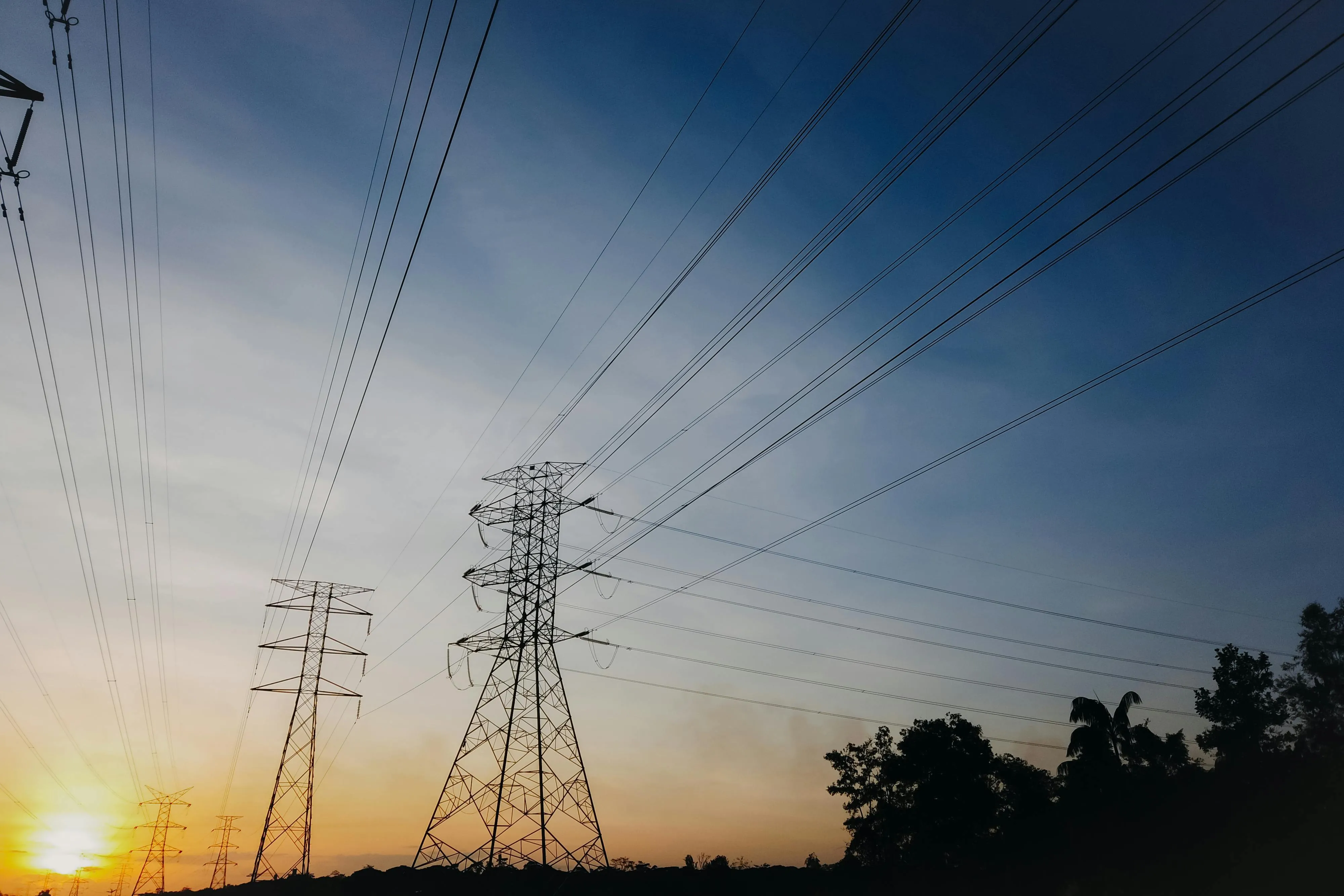
Power lines and electrical towers silhouetted against a dramatic sunset sky, symbolizing energy infrastructure and progress.

Presidential Power Sector Bond Programme

Restoring Liquidity. Strengthening the Market. Powering Nigeria's Future.

₦4T

Programme Size

100%

Sovereign Guarantee
An image of power lines against the sky

The need for a reset.

For over a decade, Nigeria's electricity sector has been held back by unpaid debts, ageing infrastructure, under-investment, and unreliable service.

These outstanding liabilities weakened power generation companies (GenCos) and gas suppliers, reduced available generation capacity, and slowed progress toward reliable electricity for households and businesses.

The solution.

In response, the Federal Government under the leadership of President Bola Ahmed Tinubu has launched the Power Sector Bond Programme — clearing verified legacy debts and strengthening the entire sector.

A decorative strip image for the Power Sector Bond Programme

What the Programme does.

The Power Sector Bond Programme is designed to transform Nigeria's electricity sector through three key objectives:

Clear Legacy Debts
Clear verified outstanding debts owed to electricity generation companies and gas suppliers.
Build Investor Confidence
Build investor confidence in the Nigerian Electricity Supply Industry (NESI).
Improve Electricity Supply
Improve electricity supply and reliability for citizens and businesses across Nigeria.

How it works

Step 1

An image of a target icon

Dedicated Company Created

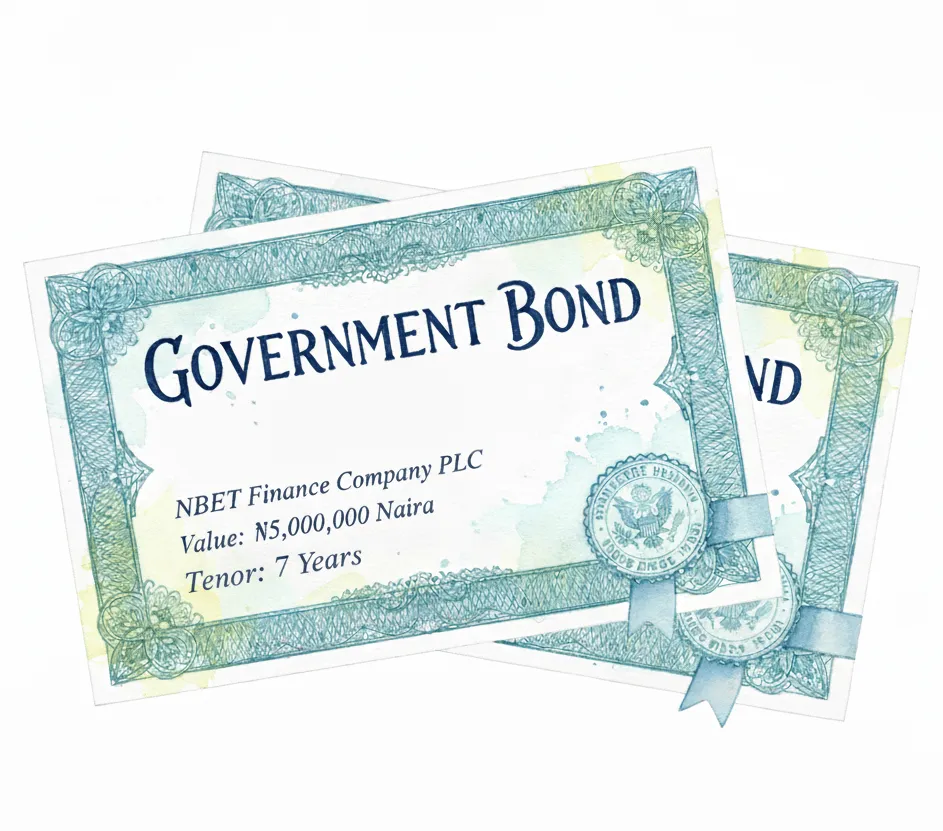
NBET Finance Company PLC was created by Nigerian Bulk Electricity Trading (NBET) strictly to raise money through the capital market.
An image of a target icon

Government-Backed Bonds

The company issues government-backed bonds in tranches. Each bond is fully guaranteed by the Federal Government of Nigeria.

Step 2

Step 3
An image of a target icon

Debt Settlement

The money raised is used only to settle confirmed debts owed to electricity Generation Companies (GenCos) and Gas Suppliers.
An image of a target icon

Gradual Repayment

Repayment will be implemented gradually, with the Federal Government as the primary funding source, complemented by market-based revenue contributions.

Step 4

Key Bond features

(Phase 1)

Comprehensive details about the Power Sector Bond Programme investment opportunity.

7 years

Bond Tenor

NBET Finance Company PLC

Issuer of the Power Sector Bond Programme.

₦1.23 trillion

Programme size allocated to settle verified outstanding liabilities of GenCos and GasCos.

₦5 million

Minimum subscription amount for investors looking to participate in the bond offering.

Credit enhancements

  • Sovereign Guarantee
  • CBN Liquidity Status
  • PenCom Compliance

Federal Government of Nigeria

Guarantor of the Power Sector Bond Programme.

Settlement of verified GenCo/GasCo liabilities

Use of proceeds.

Programme Advisers

A consortium of Nigeria's leading institutions backing this transformative initiative.
CardinalStone Partners Limited logoAfrica Finance Corporation logo
ENR Advisory logo
Olaniwun Ajayi LP logo
Afrinvest Trustees Limited logo
Sankore Securities Limited logoCoronation Registrars logoAccess Bank logo
Wema Bank logo
Futureview Securities Limited logo

Frequently asked questions

Find answers to common questions about the Power Sector Bond Programme.

  • The Presidential Power Sector Debt Reduction Plan (PPSDRP) is a Federal Government debt clearance mechanism approved by the President and endorsed by the Federal Executive Council (FEC) for the Nigerian electricity supply industry. It involves the settlement of verified debts owed power Generating Companies (GenCos) and Gas Suppliers (Gascos) by the Nigerian Bulk Electricity Trading Company (NBET).

  • NBET is a state-owned company that buys electricity in bulk from GenCos and sells it to Electricity Distribution Companies (DisCos) for onward supply to customers.

The PPSDRP has been approved by the President and endorsed by the Federal Executive Council (FEC) on 13th August 2025

Power sector debts have accumulated over several years since the privatization of the Nigerian Electricity Supply Industry (NESI) in 2013. This is because the revenue recovered from electricity consumers has consistently been lower than the actual cost of generating, transmitting, and distributing power.

Several factors contributed:

  • Electricity tariffs have historically not covered the true cost of supplying power, and government subsidies have not been sufficient.
  • Many customers are still not fully metered, making accurate billing difficult.
  • Weak billing accuracy, energy theft, and unpaid bills further reduce the revenue collected by DisCos.

As a result:

  • DisCos are unable to remit enough funds to NBET.
  • NBET struggles to pay GenCos.
  • GenCos are unable to pay Gas Suppliers (GasCos).

This creates a revenue shortfall that weakens the financial health of all market participants and limits the sector’s ability to sustain and expand power generation.

These debts create a major financial bottleneck across Nigeria’s electricity value chain, weakening GenCos, GasCos, and DisCos.

When power companies are owed large sums:

  • Gas suppliers cannot invest in maintaining or expanding pipelines.
  • Generation companies struggle to pay for fuel, repair turbines, or expand generation capacity.
  • Distribution companies receive less power to supply to customers.

This results in:

  • A vicious revenue cycle
  • Lower power output
  • More blackouts
  • Increased reliance on diesel
  • Higher cost of goods and services

If the debts remain unresolved, the strain on the power sector will worsen.

Consequences include:

  • Growing difficulty for GenCos and GasCos to sustain operations.
  • DisCos receiving less power to supply customers.
  • Reduced electricity generation over time.
  • More frequent disruptions and blackouts.
  • Reduced investor confidence and difficulty attracting financing.

The Federal Government introduced the PPSDRP to clear long-standing debts in a structured manner without disrupting power supply or creating undue fiscal pressure.

Instead of paying debts directly from the national budget, the Government is using a capital-market financing approach through sovereign-backed bonds.

Benefits:

  • Protects taxpayers and essential public spending.
  • Prevents abrupt tariff reviews.
  • Provides immediate liquidity for GenCos and GasCos to continue operations.
  • Restores investor confidence in the power sector.
  • The PPSDRP will be implemented transparently and in phases.
  • The Federal Government is completing a full reconciliation and audit of all outstanding debts.
  • After verification, the Government and GenCos will sign formal debt-settlement agreements.
  • Financing will be raised in the Nigerian capital market through NBET’s Settlement SPV.
  • The SPV will issue sovereign-backed bonds to attract reputable local and international investors.
  • Payments to GenCos and GasCos will be made via a mix of cash and bond instruments.

The Bond issuance is expected to take place in Q4 2025.

The Bond includes:

  • Sovereign Guarantee – Fully backed by the Federal Government of Nigeria.
  • CBN Liquidity Status
  • Pencom Compliance
  • Dual Listing – NGX and FMDQ

The programme was developed by the Presidential Power Sector Debt Reduction Committee (PPSDRC), chaired by the Minister of Finance with OSAD-E providing technical leadership.

Stakeholders include:

  • Nigerian Bulk Electricity Trading Plc (NBET)
  • Debt Management Office (DMO)
  • Federal Ministry of Finance (FMoF)
  • Federal Ministry of Power (FMoP)
  • Nigerian Electricity Regulatory Commission (NERC)
  • Electricity Generation Companies (GenCos)
  • Electricity Distribution Companies (DisCos)
  • Gas Suppliers (GasCos)

The PPSDRP is part of a wider reform programme to make Nigeria’s electricity market financially sustainable.

Presidential Metering Initiative (PMI)

A nationwide programme to deploy millions of smart meters to:

  • Eliminate estimated billing
  • Improve revenue collection
  • Ensure customers only pay for what they use

Targeted Electricity Subsidy Framework

A data-driven subsidy system ensuring government support goes only to low-income and vulnerable households, reducing fiscal pressure while keeping electricity affordable.

Got questions you’d love for us to answer?

We’re happy to help. Reach out to us to get your answers.

Reach out to us